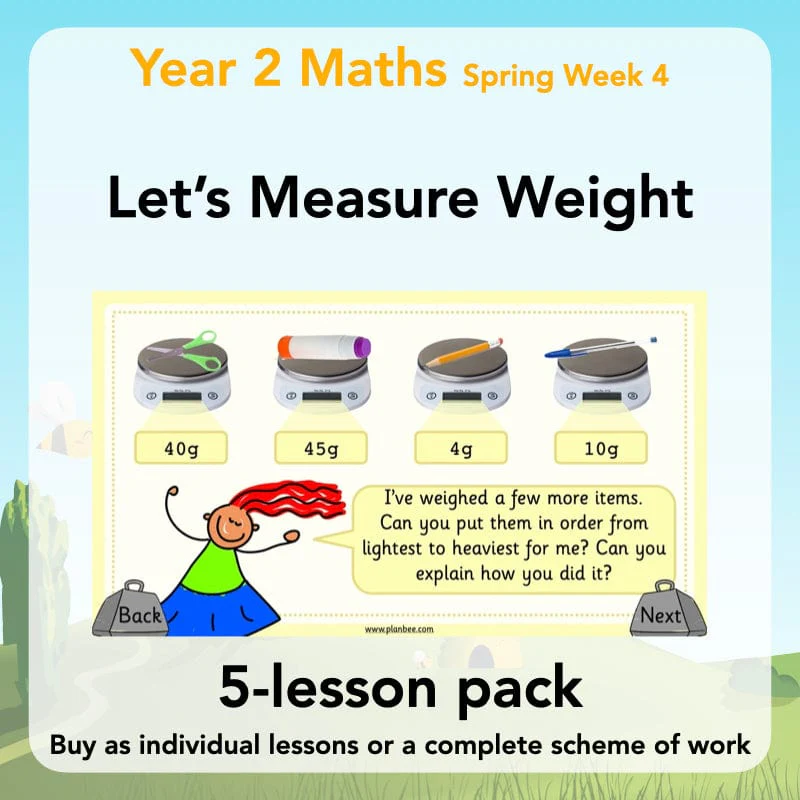
Let’s Measure Weight
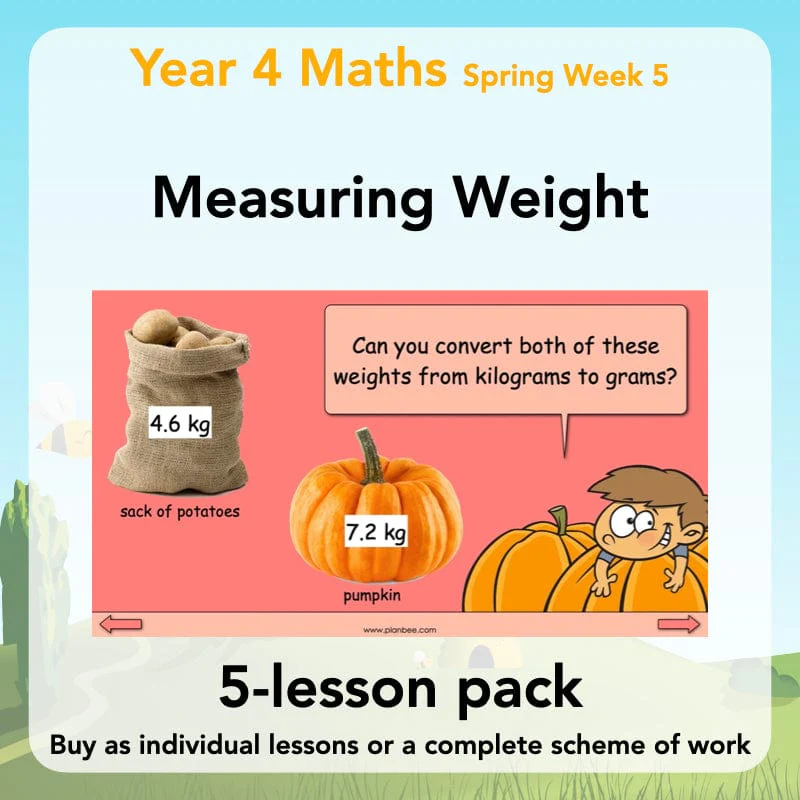
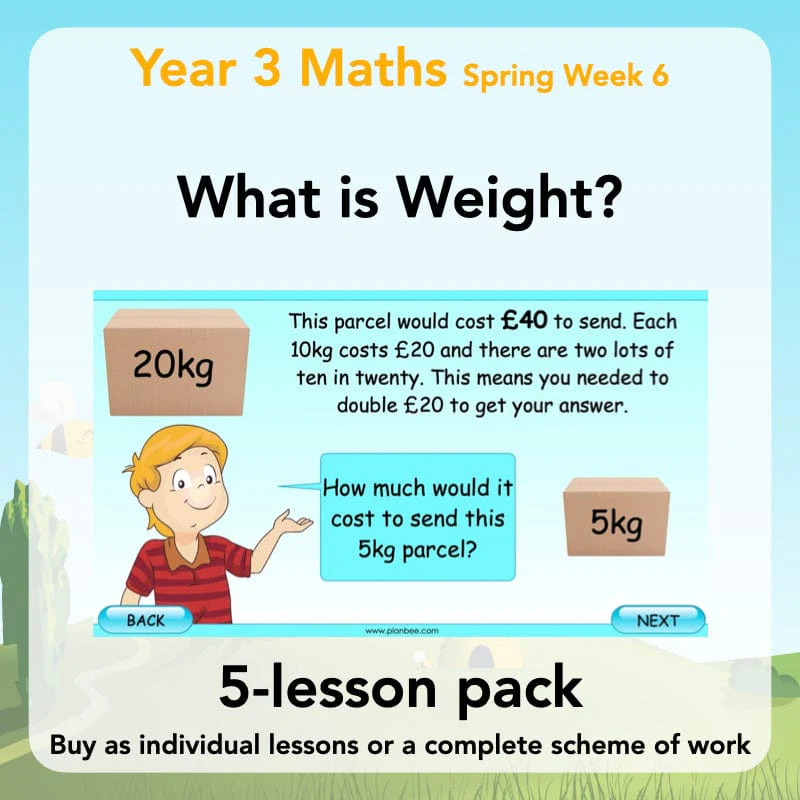
Investigate weight with your class in this five-lesson scheme of work designed to meet the measurement objectives for Year 2.
Begin to compare and use kilograms and grams when measuring various objects using a variety of equipment. Encourage your children to use their existing knowledge of place value and number lines to order different weights and read and use scales.
Estimating and Ordering
Reintroduce your class to the concept of measuring weight by challenging them to order a set of unknown objects by weight. Have your class work together to use their estimating skills and mathematical vocabulary to successfully order the objects, using balance scales to check their estimates.
What's included:
- Lesson plan
- Slides
- Activity ideas
- Differentiated worksheets
- Photo sheet
View Lesson 1
Using Grams
Introduce your class to the standard unit of measure for weight and explore the reasons behind using a standard measure. Challenge your class to measure and order a variety of objects using digital scales, ordering the objects based on their measurements.
What's included:
- Lesson plan
- Slides
- Activity ideas
- Differentiated worksheets
- Teacher’s notes
- Photo sheet
View Lesson 2
Kilograms
Investigate kilograms and their relationship to grams with your class. Challenge the children to think about the suitability of each unit of measure when measuring heavy and light objects and allow them to discuss which unit would be best to measure a variety of objects. Revisit the and = symbols when comparing various objects’ weights to 1kg.
What's included:
- Lesson plan
- Slides
- Activity ideas
- Teacher notes
- Differentiated worksheets
- Photo sheet
View Lesson 3
Reading Scales
Take a closer look at how your class can use spring scales to measure the weight of different objects. Practise reading scales and matching them to the correct weights using the children’s knowledge and understanding of number line.
What's included:
- Lesson plan
- Slides
- Activity ideas
- Weight cards
- Scale cards
- Scale sheet
- Photo sheet
- Worksheet
View Lesson 4
Measuring Amounts
Challenge your class to use their scale-reading skills to measure given amounts of different objects. They must look carefully at their scales to determine if they need to correct their measurements or if it is close enough to the desired amount.
What's included:
- Lesson plan
- Slides
- Activity ideas
- Differentiated worksheets
- Challenge cards
- Photo sheet
- Cookie recipe card
View Lesson 5
Investigate weight with your class in this five-lesson scheme of work designed to meet the measurement objectives for Year 2.
Begin to compare and use kilograms and grams when measuring various objects using a variety of equipment. Encourage your children to use their existing knowledge of place value and number lines to order different weights and read and use scales.
Estimating and Ordering
Reintroduce your class to the concept of measuring weight by challenging them to order a set of unknown objects by weight. Have your class work together to use their estimating skills and mathematical vocabulary to successfully order the objects, using balance scales to check their estimates.
What's included:
- Lesson plan
- Slides
- Activity ideas
- Differentiated worksheets
- Photo sheet
View Lesson 1
Using Grams
Introduce your class to the standard unit of measure for weight and explore the reasons behind using a standard measure. Challenge your class to measure and order a variety of objects using digital scales, ordering the objects based on their measurements.
What's included:
- Lesson plan
- Slides
- Activity ideas
- Differentiated worksheets
- Teacher’s notes
- Photo sheet
View Lesson 2
Kilograms
Investigate kilograms and their relationship to grams with your class. Challenge the children to think about the suitability of each unit of measure when measuring heavy and light objects and allow them to discuss which unit would be best to measure a variety of objects. Revisit the and = symbols when comparing various objects’ weights to 1kg.
What's included:
- Lesson plan
- Slides
- Activity ideas
- Teacher notes
- Differentiated worksheets
- Photo sheet
View Lesson 3
Reading Scales
Take a closer look at how your class can use spring scales to measure the weight of different objects. Practise reading scales and matching them to the correct weights using the children’s knowledge and understanding of number line.
What's included:
- Lesson plan
- Slides
- Activity ideas
- Weight cards
- Scale cards
- Scale sheet
- Photo sheet
- Worksheet
View Lesson 4
Measuring Amounts
Challenge your class to use their scale-reading skills to measure given amounts of different objects. They must look carefully at their scales to determine if they need to correct their measurements or if it is close enough to the desired amount.
What's included:
- Lesson plan
- Slides
- Activity ideas
- Differentiated worksheets
- Challenge cards
- Photo sheet
- Cookie recipe card
View Lesson 5
Original: $4.74
-65%$4.74
$1.66Description
Investigate weight with your class in this five-lesson scheme of work designed to meet the measurement objectives for Year 2.
Begin to compare and use kilograms and grams when measuring various objects using a variety of equipment. Encourage your children to use their existing knowledge of place value and number lines to order different weights and read and use scales.
Estimating and Ordering
Reintroduce your class to the concept of measuring weight by challenging them to order a set of unknown objects by weight. Have your class work together to use their estimating skills and mathematical vocabulary to successfully order the objects, using balance scales to check their estimates.
What's included:
- Lesson plan
- Slides
- Activity ideas
- Differentiated worksheets
- Photo sheet
View Lesson 1
Using Grams
Introduce your class to the standard unit of measure for weight and explore the reasons behind using a standard measure. Challenge your class to measure and order a variety of objects using digital scales, ordering the objects based on their measurements.
What's included:
- Lesson plan
- Slides
- Activity ideas
- Differentiated worksheets
- Teacher’s notes
- Photo sheet
View Lesson 2
Kilograms
Investigate kilograms and their relationship to grams with your class. Challenge the children to think about the suitability of each unit of measure when measuring heavy and light objects and allow them to discuss which unit would be best to measure a variety of objects. Revisit the and = symbols when comparing various objects’ weights to 1kg.
What's included:
- Lesson plan
- Slides
- Activity ideas
- Teacher notes
- Differentiated worksheets
- Photo sheet
View Lesson 3
Reading Scales
Take a closer look at how your class can use spring scales to measure the weight of different objects. Practise reading scales and matching them to the correct weights using the children’s knowledge and understanding of number line.
What's included:
- Lesson plan
- Slides
- Activity ideas
- Weight cards
- Scale cards
- Scale sheet
- Photo sheet
- Worksheet
View Lesson 4
Measuring Amounts
Challenge your class to use their scale-reading skills to measure given amounts of different objects. They must look carefully at their scales to determine if they need to correct their measurements or if it is close enough to the desired amount.
What's included:
- Lesson plan
- Slides
- Activity ideas
- Differentiated worksheets
- Challenge cards
- Photo sheet
- Cookie recipe card
View Lesson 5